Vera Flores · 13 September 2026
Eastern Europe's Student Mobility Boom Fuels Fresh Approaches to Digital Equity Education at Regional Universities
Student exchanges across Eastern Europe have risen sharply since 2023, with participation numbers climbing by over 25 percent according to European Commission mobility reports, and this growth has prompted universities in smaller cities to develop targeted digital equity training programs that address uneven access to technology and skills. Regional institutions in countries such as Romania, Bulgaria, and Slovakia now integrate exchange-driven insights into curricula that focus on inclusive digital literacy, data privacy awareness, and equitable online resource distribution.
Observers note the shift began accelerating in late 2025 when cross-border partnerships expanded under revised Erasmus+ guidelines, allowing more students from rural areas to study abroad while bringing back practical knowledge about digital divides. By September 2026 several universities plan to launch pilot modules that combine virtual exchange platforms with in-person workshops, aiming to close gaps for first-generation learners who often lack reliable internet at home.
Exchange Data Reveals Regional Patterns
Figures from the European Commission show that inbound and outbound mobility in Eastern European higher education reached approximately 180,000 participants in the 2025 academic year, compared with 140,000 two years earlier, and the increase stems partly from relaxed visa procedures plus new funding streams that prioritize underrepresented regions. Universities in cities like Cluj-Napoca and Plovdiv report that returning exchange students frequently highlight disparities in digital infrastructure, prompting faculty to redesign courses around shared best practices observed in partner institutions abroad.
Those patterns matter because many regional campuses serve higher percentages of students from lower-income backgrounds who encounter barriers to high-speed connectivity and modern devices. Data collected by the OECD education directorate indicates that 42 percent of surveyed Eastern European students experienced limited broadband during remote learning periods, a statistic that exchange participants have used to advocate for localized training solutions tailored to their home communities.
Emerging Training Models Take Shape
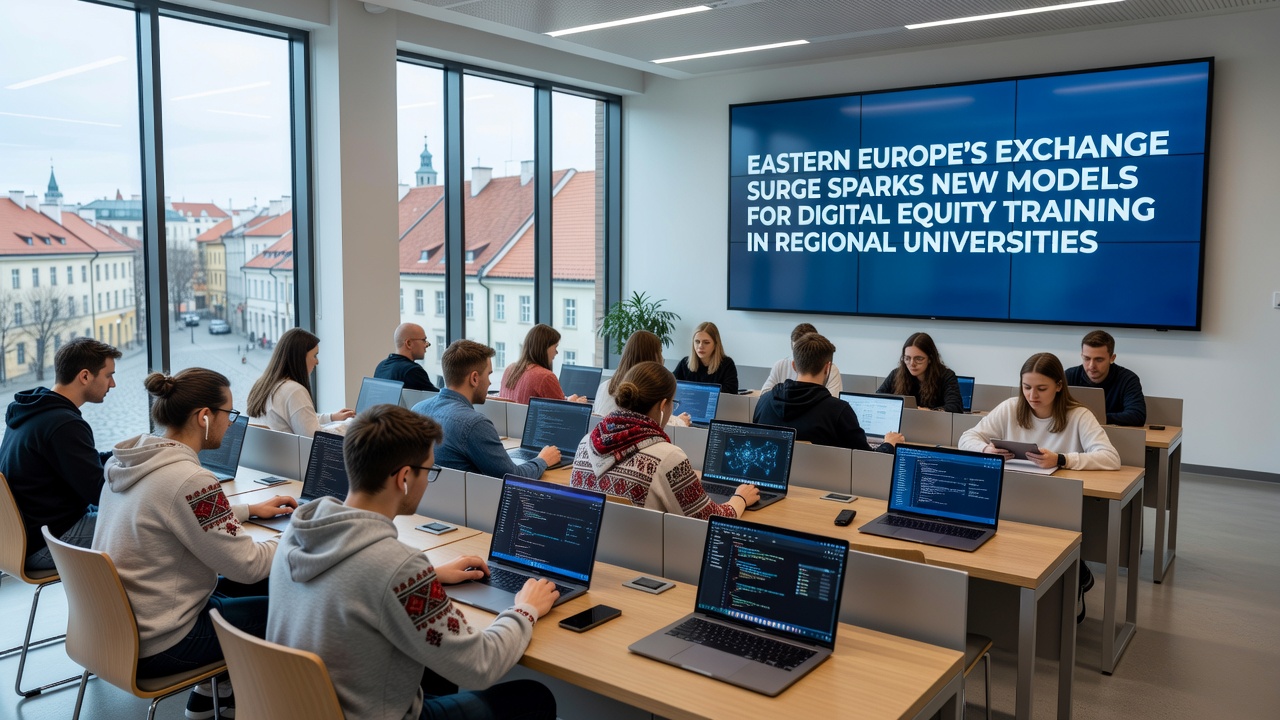
Faculty teams at several universities have started piloting blended programs that pair incoming exchange cohorts with local students for joint digital skills modules, and these efforts emphasize collaborative projects such as building accessible websites or analyzing open data sets from public sources. The approach allows participants to learn both technical competencies and cultural nuances around equity, since exchange students often arrive with different expectations shaped by their national contexts.
One model gaining traction involves modular micro-credentials that students can complete during short exchange stays, covering topics like ethical AI use, inclusive interface design, and strategies for bridging urban-rural tech gaps. Institutions coordinate these offerings through shared digital platforms funded partly by EU structural grants, enabling seamless credit transfer while ensuring content remains relevant to regional labor market needs.

Researchers tracking these initiatives point to partnerships with local NGOs that provide hardware lending libraries and community internet hubs, extending the reach of university training beyond campus boundaries. Such collaborations emerged after exchange participants shared successful examples from Nordic and Baltic partner universities, adapting those ideas to fit Eastern European resource realities.
September 2026 Milestones on the Horizon
Planning documents released by multiple regional consortia outline September 2026 as the target launch window for expanded digital equity networks that will link universities in Hungary, Poland, and the Czech Republic with counterparts in the Western Balkans. These networks intend to host joint virtual symposia where participants can exchange curriculum templates and evaluation metrics focused on measurable improvements in digital access equity.
Early indicators suggest the programs will incorporate real-time feedback loops using anonymized student performance data, allowing rapid adjustments to training content as participation grows. Government agencies in several countries have signaled support through matching funds, recognizing that enhanced digital skills among exchange alumni can strengthen regional competitiveness in technology sectors.
Conclusion
The interplay between rising student mobility and digital equity demands continues to reshape how regional universities structure training, with evidence from mobility statistics and institutional reports demonstrating tangible adaptations. As September 2026 approaches, these evolving models offer concrete examples of how exchange experiences translate into localized solutions that address persistent disparities in technology access and skills development across Eastern Europe.