Drew Flores · 27 September 2026
Polish Universities Integrate Digital Literacy into Accreditation via Regional Surveys
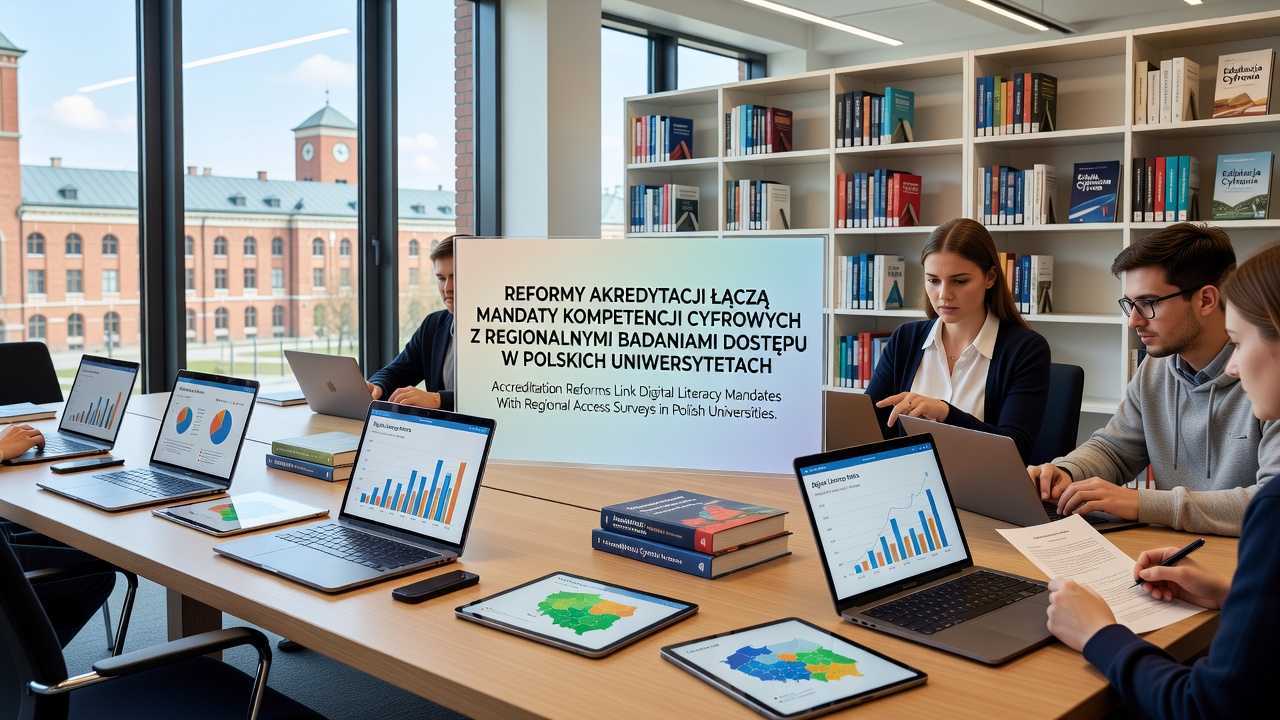
Accreditation reforms in Polish higher education now connect digital literacy mandates directly to findings from regional access surveys, and this linkage reshapes how institutions demonstrate compliance with national standards. Universities must collect and analyze data on local technology availability, internet penetration rates, and student skill levels before they receive approval for degree programs. The approach builds on earlier policy frameworks while introducing specific requirements that tie accreditation outcomes to measurable improvements in digital equity across different voivodeships.
Background on the Accreditation Updates
Recent changes from Poland's accreditation bodies require universities to submit regional access survey results alongside curriculum plans that address identified gaps in digital competencies. These surveys examine broadband coverage, device ownership patterns, and prior training opportunities within each institution's primary recruitment area, and they provide the evidence base for proposed literacy initiatives. Institutions in regions with lower connectivity scores face additional scrutiny during reviews, which encourages targeted investments in support services rather than uniform national mandates.
Data from the Polish Ministry of Education and Science shows that 68 percent of surveyed universities updated their self-assessment reports in 2025 to include such regional metrics. Observers note that this shift aligns Polish practices with broader European efforts to standardize digital skills recognition, yet it preserves flexibility for local adaptation based on survey evidence.
Regional Access Surveys as Core Evidence
Regional access surveys gather quantitative indicators on household internet subscriptions, public library digital resource usage, and secondary school technology integration rates. Teams conducting these surveys often partner with local governments and statistical offices to ensure representative sampling across urban, suburban, and rural zones. The resulting datasets reveal disparities that accreditation panels then use to evaluate whether a university's digital literacy plan adequately responds to community needs.
Key Survey Components
- Household device access rates measured through annual household budget surveys
- Student self-reported digital skill assessments collected via standardized questionnaires
- Infrastructure mapping of 5G rollout progress and public Wi-Fi availability
- Employer feedback on graduate digital readiness collected from regional businesses
One analysis conducted by a consortium of regional universities found that areas with below-average broadband speeds showed 22 percent lower participation in online learning modules, and this correlation now informs the weighting given to infrastructure improvement commitments during accreditation decisions.

Digital Literacy Mandates in Practice
Accreditation panels now require explicit integration of digital literacy modules that scale according to survey-identified deficiencies. Programs in regions with high device access but low skill scores must emphasize advanced topics such as data privacy and collaborative online tools, whereas areas showing basic access barriers receive priority for foundational training resources. This differentiated model replaces previous one-size-fits-all approaches and ties accreditation renewal cycles to demonstrated progress on survey benchmarks.
Implementation timelines indicate that full compliance checks begin in September 2026, giving institutions an additional academic year to align curricula and collect baseline follow-up data. During this period, universities submit interim progress reports that detail partnerships with regional libraries and vocational centers to extend digital training beyond campus boundaries.
Effects on University Operations and Student Outcomes
Polish institutions have adjusted internal quality assurance processes to incorporate regional survey data into course design reviews. Faculty development programs now include training on adapting digital content for varied connectivity environments, and several universities have established dedicated offices to coordinate survey collection and accreditation documentation. Student enrollment patterns show early shifts as institutions in lower-access regions highlight enhanced support services in recruitment materials.
According to European Commission education reports, similar survey-linked reforms in other member states produced measurable gains in equitable digital skill distribution within three years of introduction. Polish universities track comparable indicators, including module completion rates and post-graduation employment outcomes in technology-intensive sectors.
Conclusion
The linkage between accreditation reforms, digital literacy mandates, and regional access surveys continues to evolve as Polish universities prepare for September 2026 implementation deadlines. Ongoing data collection and inter-institutional collaboration will determine how effectively these changes address local disparities while maintaining consistent national standards. Researchers continue to monitor enrollment trends and skill assessment results to refine the framework for future accreditation cycles.