Vera Flores · 11 October 2026
Regional Gaps in Online Learning Infrastructure Prompt National Revisions to Digital Skills Standards
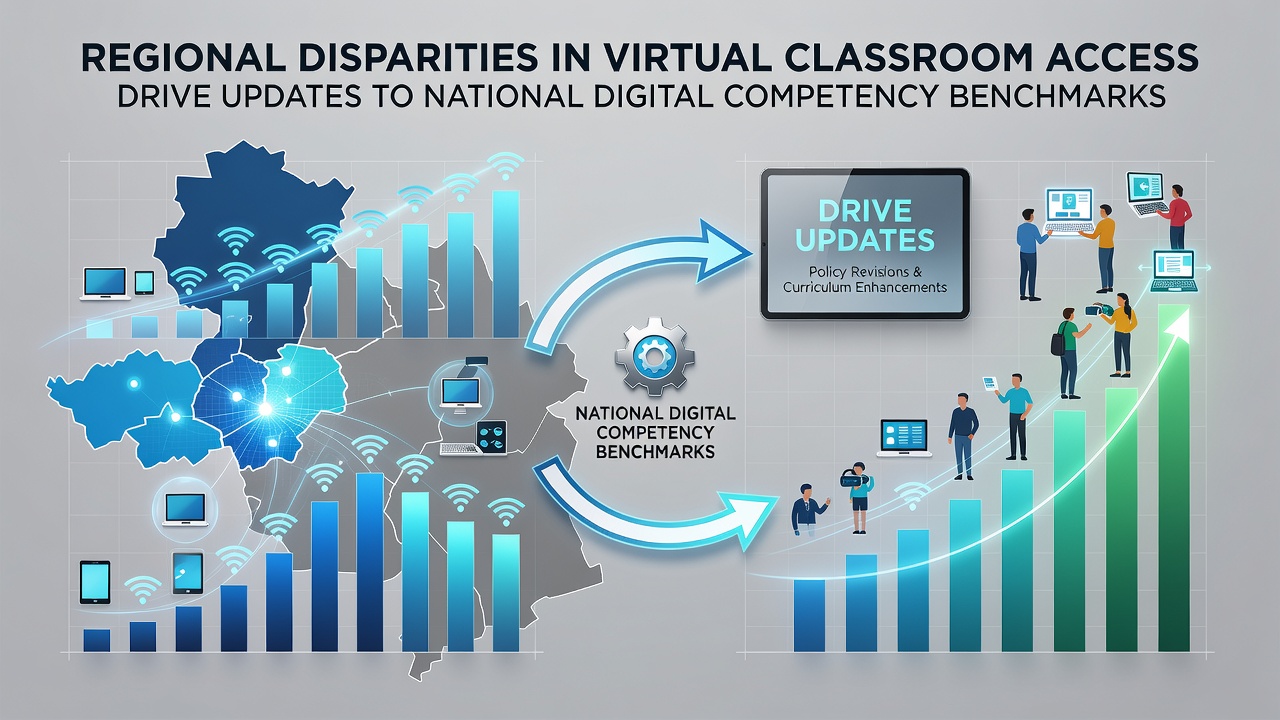
Regional differences in broadband availability and device distribution continue to shape how education ministries adjust digital competency benchmarks, with several nations releasing updated frameworks in the past year. Data from international monitoring bodies indicate that urban centers maintain higher rates of consistent virtual classroom participation compared to rural and remote areas, leading policymakers to incorporate tiered proficiency targets that account for local infrastructure conditions.
Researchers tracking these patterns note that students in areas with limited high-speed internet often face interruptions during live sessions, which affects skill acquisition in areas such as collaborative online tools and digital resource navigation. In response, education authorities have begun embedding flexible assessment pathways that recognize partial access scenarios rather than assuming uniform connectivity for all learners.
Infrastructure Patterns Across Regions
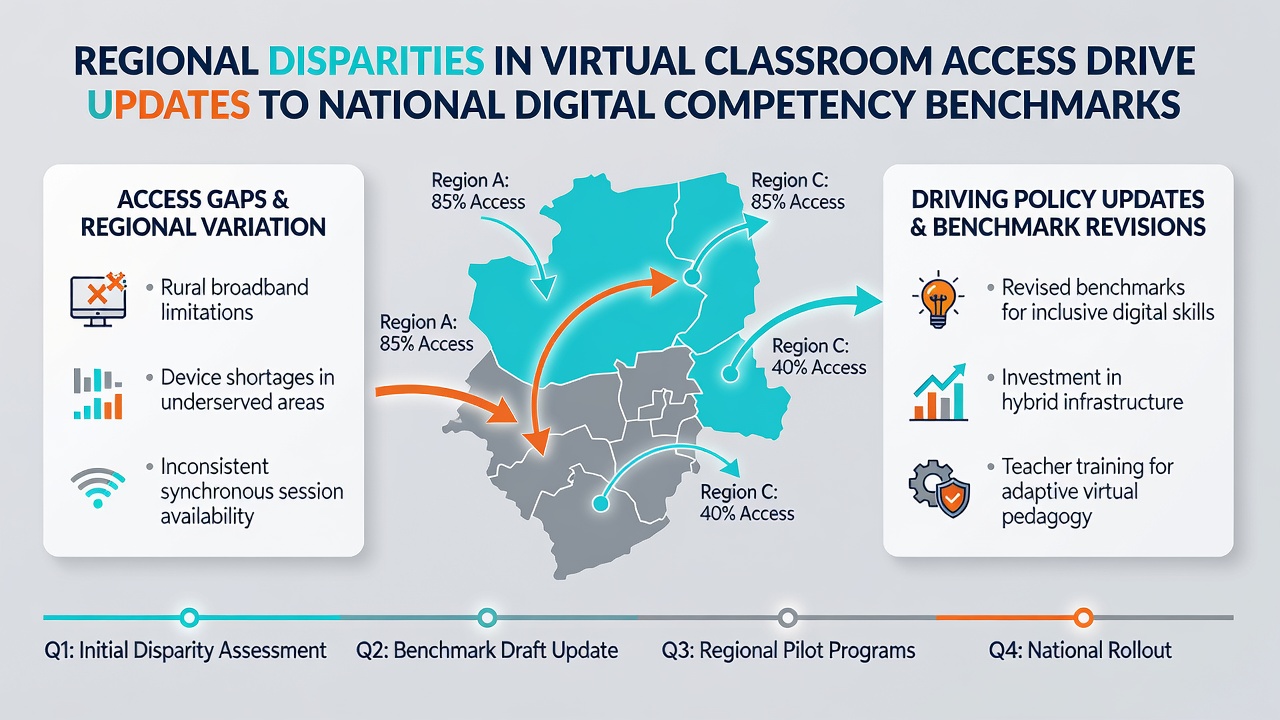
Surveys conducted by statistical agencies reveal that certain provinces report virtual classroom access rates exceeding 85 percent while neighboring regions fall below 60 percent, a spread that has prompted targeted funding allocations. These variations stem from differences in fiber optic deployment timelines and household equipment ownership, factors documented in reports from both European and North American statistical offices.
One study released by the OECD in 2025 highlighted how schools in mountainous and coastal zones experience greater latency issues during peak usage hours, prompting curriculum designers to prioritize asynchronous learning modules in revised benchmarks. The adjustments allow students to demonstrate competency through recorded submissions when real-time connections prove unreliable.
Policy Responses and Benchmark Adjustments
National education departments have introduced modular digital competency frameworks that list core skills alongside optional extensions based on available technology. For instance, basic information literacy remains mandatory everywhere, whereas advanced multimedia production appears only in districts with proven high-bandwidth access. This approach emerged after pilot programs showed uneven completion rates when uniform standards were applied across diverse geographies.
Canadian authorities updated their digital skills guidelines in September 2026 to include regional performance indicators, drawing on data collected from provincial school boards. The new metrics track not only individual student outcomes but also infrastructure readiness scores that schools must report annually. Similar revisions appeared in Australian state curricula earlier that same year, where remote communities received dedicated support for offline-capable platforms.
European Union education working groups have circulated draft recommendations that encourage member states to align competency updates with territorial cohesion objectives. These drafts reference connectivity statistics gathered through the Digital Economy and Society Index, which shows persistent east-west and urban-rural divides in household internet speeds suitable for video-based instruction.
Implementation Challenges and Monitoring
School administrators report that teacher training programs must now address both high-tech and low-tech delivery methods to meet the updated benchmarks. Professional development modules increasingly include strategies for hybrid lesson design that function across varying bandwidth conditions. Observers note that districts with recent infrastructure upgrades demonstrate faster adoption of the new standards, while others require phased rollout schedules.
October 2026 saw the launch of a cross-regional data portal managed by an academic consortium that aggregates anonymized access metrics from participating ministries. The portal enables comparisons of benchmark attainment rates against connectivity levels, providing evidence for further refinements. Early figures indicate that regions investing in community Wi-Fi hubs show measurable gains in digital collaboration competencies within one academic term.
Industry reports from technology providers supplying education platforms document increased demand for lightweight applications that synchronize content when connections become available. These tools support the competency benchmarks by allowing progress tracking independent of constant online presence. Government procurement offices in several countries have adjusted tender requirements to favor solutions compatible with intermittent connectivity.
Conclusion
Regional disparities in virtual classroom access have directly influenced the structure and content of national digital competency benchmarks, resulting in frameworks that incorporate local infrastructure realities. Ongoing data collection through international and domestic channels continues to inform adjustments, with education systems adapting assessment methods and training resources accordingly. The pattern of iterative updates reflects measured responses to documented access variations rather than uniform policy assumptions.