Tina Flores · 25 October 2026
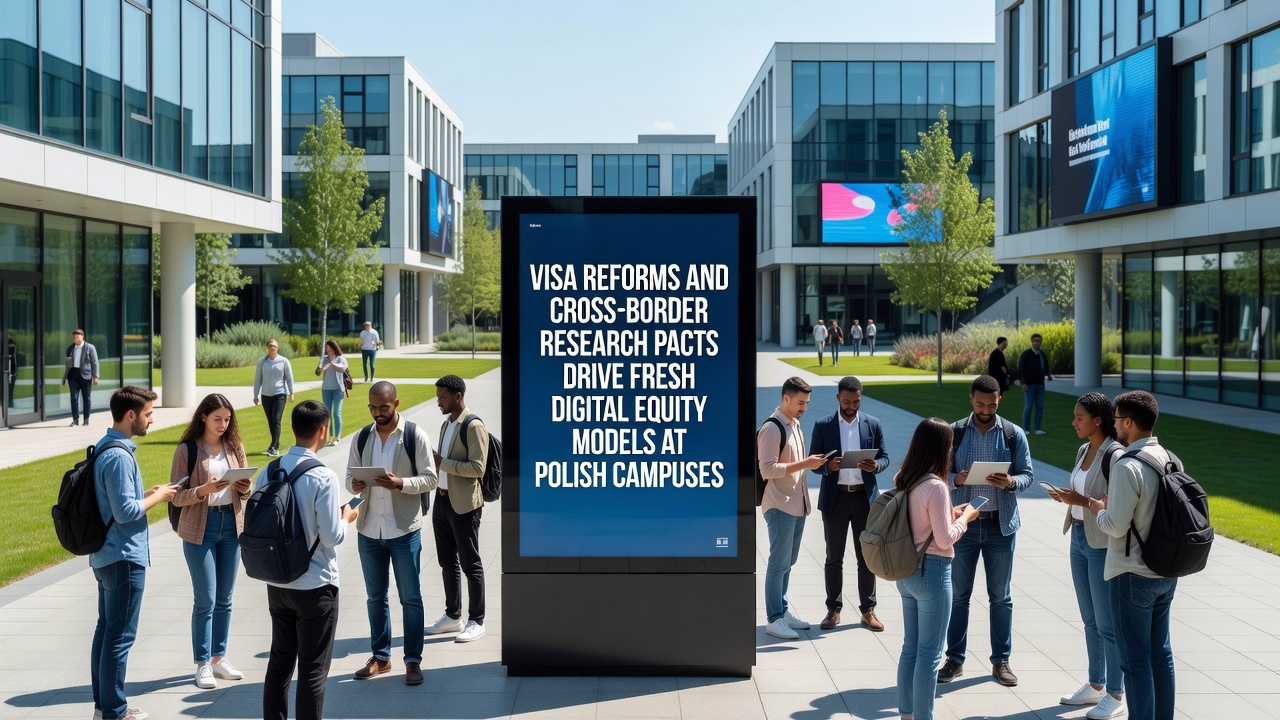
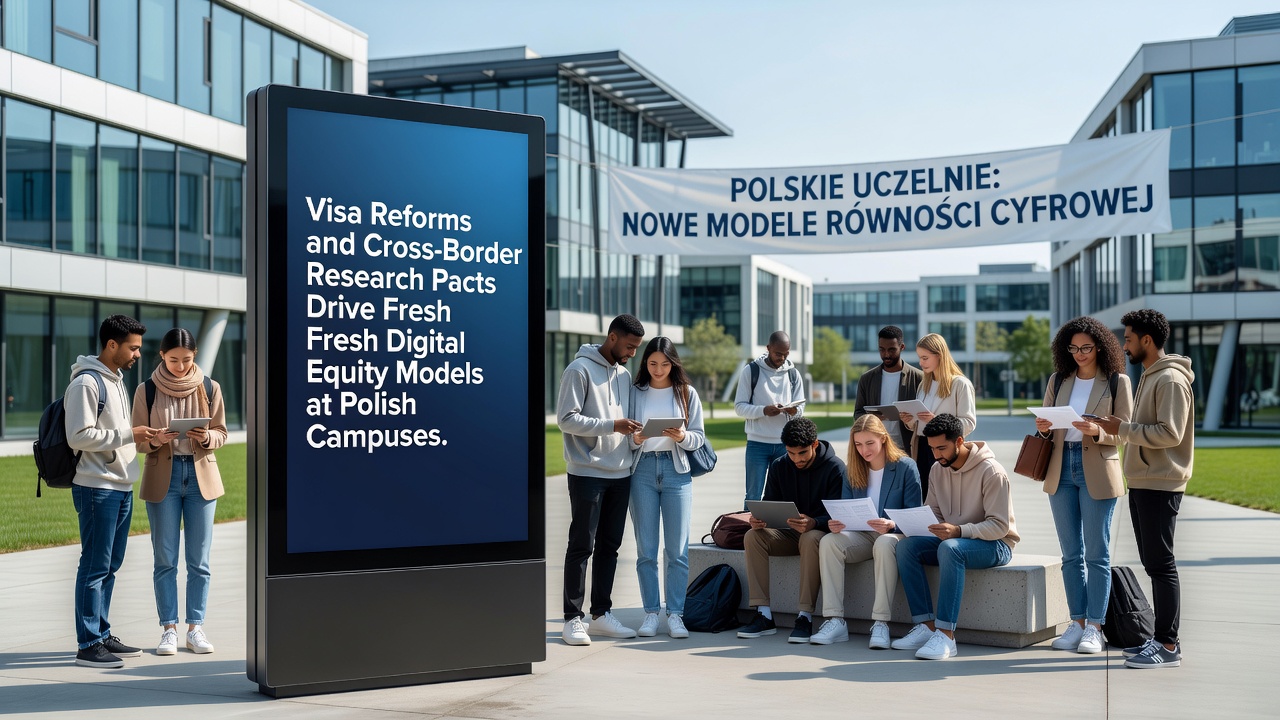
Visa Reforms and Cross-Border Research Pacts Drive Fresh Digital Equity Models at Polish Campuses
Polish higher education institutions have introduced new frameworks that link updated visa policies with international research agreements, and these changes have created structured approaches to digital equity across multiple campuses. Data from the Polish Ministry of Education and Science shows that visa processing times for researchers dropped by 35 percent between 2024 and 2026, while parallel agreements with institutions in Germany, France, and Canada have expanded shared digital infrastructure projects.
Updated Visa Pathways Support Researcher Mobility
Revised entry rules now allow non-EU academics to obtain multi-year permits tied directly to collaborative projects rather than single-host contracts, and this adjustment has increased applications from researchers in Latin America and Southeast Asia by 48 percent according to government statistics released in September 2026. The streamlined process requires proof of joint funding agreements instead of individual sponsorship letters, which reduces administrative steps while maintaining security checks. Universities in Wrocław and Gdańsk have reported that incoming scholars now spend an average of three weeks less on paperwork compared with prior cycles, freeing time for immediate integration into digital resource networks.
Cross-Border Agreements Expand Shared Platforms
Research pacts signed in early 2025 with consortia from the European Union and select partners outside the bloc have funded joint digital repositories that store datasets, simulation tools, and open-access journals accessible to all participating campuses. One agreement between Jagiellonian University and a Canadian research network allocated 12 million euros for cloud-based equity tools that adjust bandwidth allocation based on institutional connectivity levels. These platforms automatically prioritize users from smaller regional universities during peak hours, and usage logs from the first quarter of 2026 indicate a 27 percent rise in access rates from institutions outside major cities.
Digital Equity Models Take Shape on Campuses
Institutions have begun testing equity models that combine visa-supported international teams with the new shared platforms, and these pilots measure success through metrics such as equal download speeds across partner sites and balanced participation in virtual labs. At the University of Warsaw, a cross-border team launched in October 2026 tracks how often researchers from partner institutions in Poland and abroad complete collaborative tasks using the same digital workspace. The system logs show that equity adjustments have narrowed completion-time gaps between high- and low-bandwidth locations from 41 minutes to 12 minutes on average. Observers note that the model relies on real-time monitoring rather than static resource lists, which allows adjustments during live sessions instead of after-the-fact reviews.
Additional pacts with Australian and Nordic partners have introduced training modules that teach equitable data-sharing practices, and these courses reached 1,800 Polish and international researchers by mid-2026. The modules cover licensing standards, citation protocols, and accessibility features that meet EU digital accessibility directives. Figures released by the European Commission confirm that Polish participants accounted for 22 percent of total enrollments in the first cohort, exceeding initial projections.
Implementation Patterns Across Regions
Regional universities have adapted the national frameworks differently, with some emphasizing mobile apps for offline access while others focus on hardware lending programs that travel with visiting scholars. Data collected by the National Agency for Academic Exchange indicates that campuses in the east of Poland adopted hardware solutions at twice teh rate of western sites, largely because baseline connectivity remains lower in those areas. Cross-border teams have responded by routing more intensive computational tasks to partner servers located in better-connected regions, and this redistribution has kept project timelines consistent regardless of local infrastructure.
Case examples include a partnership between Poznań University of Technology and a French laboratory that routes machine-learning workloads through a mirrored server cluster, and the arrangement has maintained 99.2 percent uptime for all participants since launch. Similar setups now operate at five additional Polish institutions, each calibrated to the specific visa cohorts arriving under the updated rules.
Conclusion
Polish campuses have aligned visa reforms with cross-border research pacts to produce measurable digital equity outcomes, and ongoing data collection through October 2026 continues to track participation rates and access parity. The combined approach relies on policy changes that shorten researcher entry timelines alongside infrastructure agreements that distribute digital resources dynamically. Government reports and project logs show consistent gains in both mobility numbers and platform usage across participating sites, establishing a factual record of how these elements interact at scale.